
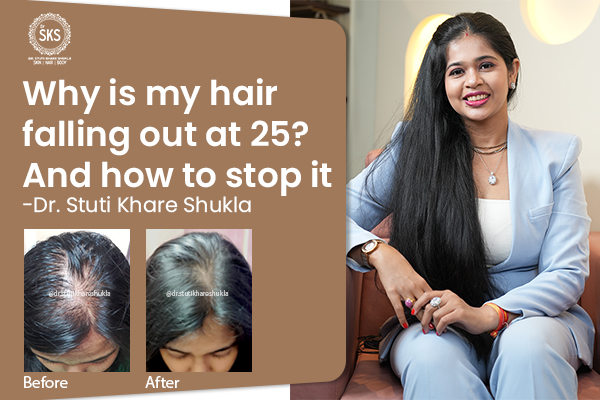
hair falling out at 25 – If you’re 25 and experiencing hair loss, you might be asking yourself: Why is my hair falling out at 25? While it’s stressful, it’s more common than you might think—and many effective ways exist to stop or reduce it. According to renomed dermatologist Dr. Stuti Khare Shukla, understanding the cause is the first step toward regrowth and longer-term hair health.
Common causes of hair falling out at 25
1. Early genetic or pattern hair thinning
Even in your mid-20s, if there’s a family history of male or female pattern hair loss (androgenetic alopecia), hair follicles may start miniaturising. Dr. Khare Shukla notes her treatments are designed for early stages of thinning.
2. Hormonal imbalances
Hormones shift for many reasons around this age—thyroid issues, PCOS (for women), early menopause changes, or male hormonal variation. Dr. Khare Shukla emphasises checking hormone levels when hair fall begins.
3. Nutritional deficiencies
Age 25 is often a time of heavy demands—career stress, social commitments, dietary shifts. Deficiencies in iron, vitamin D, zinc, protein and B-vitamins often show up as increased hair shedding.
4. Stress, lifestyle & sleep patterns
Late nights, high work stress, erratic meals, travel and poor sleep all contribute. Sudden or consistent stress may push hair into the shedding phase (telogen effluvium). Dr. Khare Shukla highlights lifestyle and scalp care as key.
5. Scalp & external hair care issues
At 25, you may use more products, style more, change hair colour, or try frequent chemical treatments. These can lead to scalp inflammation, damaged shaft structure and make hair more prone to falling. A healthy scalp is foundational.
hair falling out at 25 – dermatologist-approved steps
Step 1: Get a professional assessment
Visit a dermatologist (like Dr. Khare Shukla) and undergo a proper evaluation—scalp health, family history, nutritional labs (iron, vitamin D, thyroid), lifestyle review. Early action gives you more options.
Step 2: Support your internal health
- Make sure your diet includes adequate protein (e.g., eggs, lentils, dairy or vegetarian alternatives), iron (leafy greens, legumes, red meat if non-veg), zinc (nuts, seeds, whole grains).
- Vitamin D and B-vitamins are often low; correct as needed. Dr. Khare Shukla reports that addressing internal deficits helps reduce shedding.
- Manage stress: regular sleep (7-8 hours), moderate exercise, mindful breaks. These help restore the hair growth cycle.
Step 3: Improve scalp health and hair care habits
- Use a mild shampoo, avoid heavy residue, ensure scalp is free from buildup and irritation.
- Avoid tight hairstyles, excessive heat styling, harsh chemical changes which accelerate hair shaft breakage and loss. Dr. Khare Shukla emphasises gentle styling for women.
- Consider tailored dermatologist-recommended scalp and hair-health products that nourish follicles, particularly in early thinning.
Step 4: Use specialised dermatologist-guided treatment
When you’re 25 and hair is falling out, you may benefit from specialist treatments designed for early thinning or diffuse shedding. Dr. Khare Shukla’s signature treatment—the SKS Hair Growth Booster®—is described as effectively helping patients with shedding, early thinning and diffuse loss by nourishing both scalp and follicles.
Step 5: Monitor progress and maintain the gains
- Track shedding reduction, look for new hair-growth (baby hairs), improved texture, smaller part width or improved volume over 8-12 weeks. Dr. Khare Shukla cites visible progress in many patients within that timeframe.
- Maintain healthy habits even after initial improvement—nutrition, scalp care, stress control remain important for long-term results.
- If the fall continues beyond 6 months or patches appear, revisit your dermatologist.
Dr. Stuti Khare Shukla Contact Information
Social Media Links:-
More Ways to Contact:-
Conclusion
If you’re experiencing hair falling out at 25, try not to panic—it’s a signal your hair cycle or scalp environment needs support. By combining a professional consultation, good internal health, improved scalp/hair habits and targeted treatment, you give your hair the best chance to recover. Dr. Stuti Khare Shukla’s methodology—holistic, early-stage focused and scalp-centric—shows that young adults can stop thinning and restore density without drastic procedures. The sooner you act, the more options you have ahead of you.
hair falling out at 25 FAQs
Q: Is it normal to lose hair at 25?
A: Slight shedding is normal, but sustained loss, thinning, or visible scalp should prompt a consultation. Early pattern or hormonal loss is not unusual at this age.
Q: How long will it take to stop the fall and see regrowth?
A: With a proper plan, reduction in shedding is often seen in 8-12 weeks, improved density by 3-6 months. Specialist treatment helps speed this.
Q: Can I avoid thinning permanently once I start early?
A: Early intervention improves the chance of long-term control. But ongoing maintenance is needed—healthy habits plus professional support.
Q: Are supplements enough?
A: Supplements help when you have documented deficiency, but only one part of a plan. Scalp health, lifestyle and specialised therapies are also necessary. Dr. Khare Shukla emphasises a multi-factorial approach.
Q: Do I need surgery or extreme treatments at 25?
A: Not at this stage typically. Many young adults respond well to non-surgical, dermatologist-guided solutions focused on early thinning and scalp nourishment. Dr. Khare Shukla’s approach illustrates this.
Related Tags:-
- best hair doctor in India
- hair growth queen of India
- dermatologist for hair growth
- best hair treatment in Mumbai
- non surgical treatment for hair loss
- Hair Growth Booster®
- Awards and Achievements
- Best Hair Fall Treatments in India
- Hair Transplant
- Hair Transplant vs. Hair Growth Booster®
- How to Stop Hair Loss in Women Naturally
- Top 5 Causes of Sudden Hair Loss
- Hair Growth Results
- Teenage Hair Fall Treated Without Surgery
- Dry Hair After Wash
- Keratin Treatment
- The Dark Side of Daily Heat Styling
- Coloured + Damaged Hair
- Hair Oiling
- Hair Colouring Safe
- SKS Hair Growth Booster
- Hair Transplant vs. SKS Hair Growth Booster
- Balding or Thinning
- Real People Real Results
- Treatment At Home
- Best Dermatologist for Hair Growth in India
- Non-Surgical Hair Regrowth Solutions
- Patients Avoid Hair Transplant Surgery
- Top Hair Loss Myths
- Common Causes of Hair Fall
- Hair Grow Faster After Postpartum Hair Loss
- Best Hair Growth Foods for Indian Women
- hair falling out at 25