
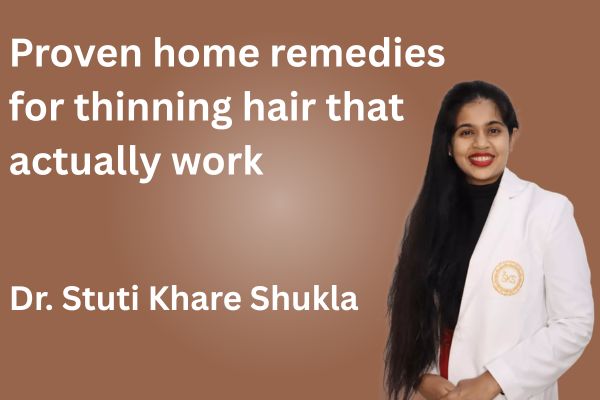
Proven home remedies for thinning hair – Thinning hair can be unsettling, especially when you’re trying everything and not seeing improvement. Fortunately, some Proven home remedies for thinning hair are simple, safe, and scientifically sensible—especially when paired with a dermatologist-informed routine focused on scalp health and nourishment. Dr. Stuti Khare Shukla emphasizes that addressing both scalp and lifestyle factors is essential for real, lasting results and improving the environment for hair growth.
What causes hair thinning?
Before diving into remedies, it’s helpful to understand what makes hair thin:
- Poor scalp environment — Buildup of oil, product residue, or dry skin can weaken follicles and impede hair growth.
- Nutrient deficiencies — Lack of key vitamins or minerals (like iron, zinc, or Vitamin D) weakens strands and hair structure.
- Stress or lifestyle habits — Chronic stress, inadequate sleep, or poor diet can trigger hair fall.
- Damage from styling — Frequent heat or chemical exposure may contribute to thinning and breakage.
Understanding the cause helps you pick remedies that actually support healthy growth and reduce shedding.
Proven home remedies for thinning hair: What actually works
1. Improve scalp circulation with gentle massage
One of the easiest and most effective home practices is scalp massage. Massaging the scalp helps increase blood flow, enhances nutrient delivery to hair follicles, and can improve overall scalp health—an environment where hair thrives. You can do this with clean fingertips in small circular motions for 5–10 minutes, several times per week.
Combining massage with a few drops of a light oil (like coconut, almond, or sesame) can nourish the skin without weighing hair down. And remember: over-oiling can lead to buildup and counteract benefits—as Dr. Khare Shukla explains with caution about heavy oiling habits.
2. Use lightweight oiling correctly
Traditional oiling isn’t inherently bad—but it must be done right and in moderation. According to dermatologist-guided advice, light oiling can help reduce dryness, detangle strands and temporarily improve shine by smoothing the cuticle.
How to do it:
- Warm a small amount of lightweight oil (e.g., coconut, almond) to enhance absorption.
- Apply gently using your fingertips and massage in circular motions—don’t rub vigorously.
- Leave for 2–3 hours (avoid overnight on the scalp to reduce buildup).
- Rinse thoroughly with a mild, sulfate-free cleanser to avoid residue.
This method doesn’t directly create new hair, but it fosters a healthier scalp environment, which supports regrowth.
3. Household hair packs & topical pastes
Nature offers several kitchen ingredients with properties supportive of hair health—especially if thinning is due to dryness or weak strands:
Aloe vera gel
Aloe’s hydrating and soothing properties can calm inflammation and provide moisture to the scalp and follicles.
How to use:
Apply pure aloe gel directly to the scalp and hair, leave for 30–45 minutes, then rinse. Do this 1–2 times weekly.
Fenugreek seeds (methi) paste
Fenugreek seeds contain proteins and nicotinic acid that may fortify hair and help reduce shedding.
How to use:
Soak fenugreek seeds overnight, grind to a paste, apply to scalp for 30 minutes and rinse. Weekly application can support healthier hair texture.
These packs help care for the scalp and strands without harsh chemicals—making them useful additions to a balanced routine.
4. Balanced wash routine for thinning hair
A proper wash routine can reduce breakage and maintain follicle health. Harsh shampoos and aggressive scrubbing can strip essential oils and weaken hair. Dr. Khare Shukla highlights the importance of gentle care and maintaining natural oils.
Home wash guidelines:
- Shampoo 1–2 times a week with a mild, sulfate-free product.
- Rinse with lukewarm water and finish with cool water to help close cuticles.
- Condition your mid-lengths and ends—avoid heavy conditioner on the scalp.
- Pat hair dry gently with a soft cloth; avoid vigorous towel rubbing.
These steps help preserve moisture, reduce frizz, and prevent damage that worsens thinning.
5. Dietary support from your kitchen
Nutrition plays a crucial role in hair structure and growth. A broadly balanced diet supports all hair regrowth efforts, especially with home care.
Foods to include:
- Protein-rich foods: lentils, eggs (if you eat them), dairy or soy.
- Iron & zinc sources: spinach, legumes, pumpkin seeds, nuts.
- Vitamin C fruits: citrus, guava, berries.
- Omega-3 sources: flax seeds, walnuts, fish (if non-veg).
Eating for follicle health ensures your body has the building blocks it needs to support every stage of the hair growth cycle.
6. Reduce styling stress
Heat and chemical styling can exacerbate thinning. Even when you’re trying remedies at home, minimizing additional stress on your strands is important.
Tips:
- Air-dry hair when possible.
- Use soft ties and avoid tight hairstyles that pull on the scalp.
- Limit frequent heat or aggressive styling that weakens strand integrity.
These habits protect existing hair while remedial care supports regrowth.
When home remedies aren’t enough
Home remedies aim to strengthen the scalp, improve hydration, and create a nurturing environment for hair growth—but they may not replace medical treatments when thinning has deeper causes (hormonal imbalance, genetic pattern loss, systemic deficiency, etc.). Dr. Shukla’s work emphasizes combining scalp-focused care with medical insight when needed—for instance, evaluating diet, hormones or tailored scalp therapy that supports growth beyond simple home measures.
If you’re noticing persistent hair thinning despite natural remedies, professional assessment can help uncover underlying factors and complement your home routine with an individualized plan.
Dr. Stuti Khare Shukla Contact Information
Social Media Links:-
More Ways to Contact:-
Final thoughts
“Proven home remedies for thinning hair” are not magic potions—they are gentle, supportive steps that enhance scalp health, reduce damage and fortify hair from the base. When combined with good habits (wash routine, massage, nutrition, protection from styling damage), these practices become part of a holistic hair-health lifestyle. For deeper or stubborn cases, consulting a dermatologist who can interpret your scalp and hair pattern ensures that home care is part of a larger, effective strategy.
Start with consistency, patience and smart habits—healthy hair often begins at the roots.
Related Tags:-
- best hair doctor in India
- hair growth queen of India
- dermatologist for hair growth
- best hair treatment in Mumbai
- non surgical treatment for hair loss
- Hair Growth Booster®
- Awards and Achievements
- Best Hair Fall Treatments in India
- Hair Transplant
- Hair Transplant vs. Hair Growth Booster®
- How to Stop Hair Loss in Women Naturally
- Top 5 Causes of Sudden Hair Loss
- Hair Growth Results
- Teenage Hair Fall Treated Without Surgery
- Dry Hair After Wash
- Keratin Treatment
- The Dark Side of Daily Heat Styling
- Coloured + Damaged Hair
- Hair Oiling
- Hair Colouring Safe
- SKS Hair Growth Booster
- Hair Transplant vs. SKS Hair Growth Booster
- Balding or Thinning
- Real People Real Results
- Treatment At Home
- Best Dermatologist for Hair Growth in India
- Non-Surgical Hair Regrowth Solutions
- Patients Avoid Hair Transplant Surgery
- Top Hair Loss Myths
- Common Causes of Hair Fall
- Hair Grow Faster After Postpartum Hair Loss
- Best Hair Growth Foods for Indian Women
- hair falling out at 25
- Hair Growth Specialist in Hyderabad
- Men Experiencing Early Baldness
- Proven home remedies for thinning hair